
You’ve Been Burned. Your Customers Might Be Feeling the Same Thing.
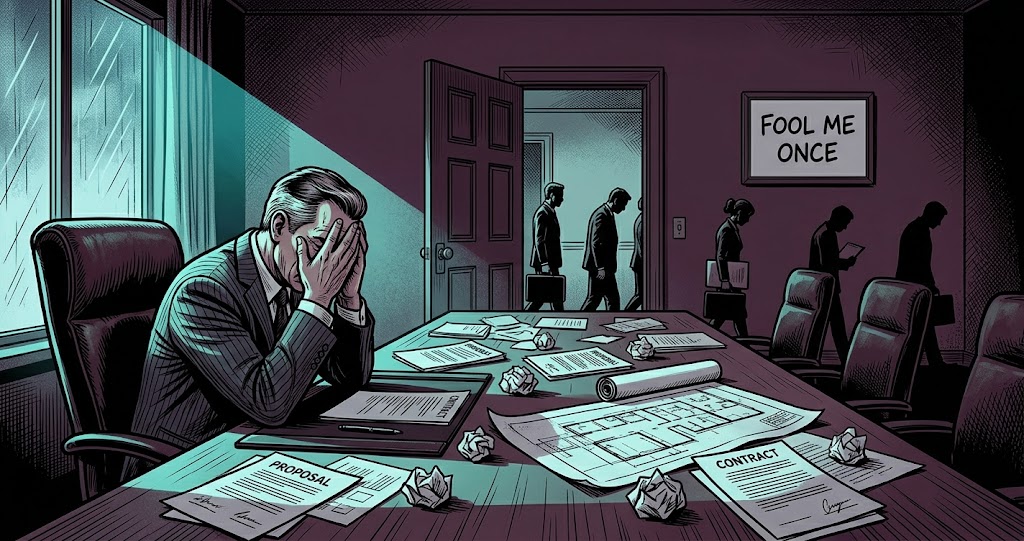
The Burned Skeptic has a trust problem: it points in two directions. You do not trust the marketing vendors who overpromised and underdelivered. You are skeptical of new channels, new tools, new strategies. What you may not have considered is whether your customers have a version of the same experience with you.
Not because you have failed them. Not because your product is bad. But because the gap between what your marketing promises and what your retention experience delivers has quietly eroded their confidence. They bought. They stayed for a while. And then something felt off. The communication stopped, the follow-through did not match the pitch, the loyalty program was nothing like what they imagined when they signed up. They left. Quietly. The way Burned Skeptics do.
The pattern the Burned Skeptic has with marketing vendors, overpromise, underdeliver, disappear, is sometimes the same pattern their customers experience with them. Fixing your own retention is what breaks that cycle.
The Burned Skeptic’s instinct is to protect against being misled. The question worth asking is whether your customers have the same instinct, and whether you’ve given them reason to use it.
What Burned Skeptic Customer Retention Actually Looks Like
The Burned Skeptic’s retention tends to be underdeveloped. Not because of neglect, but because every retention tool or strategy has been dismissed at some point as vendor noise. Email marketing is dead. SMS is spammy. Loyalty programs are gimmicks. These conclusions feel earned because the vendor who pitched them delivered nothing.
The reality is that the tools were not the problem. The strategy attached to them was. Or the execution. Or the absence of accountability. Burned Skeptics are correct that a lot of marketing activity produces no revenue. They are incorrect when that conclusion becomes a blanket veto on the tactics themselves.
In practice, this means the Burned Skeptic’s customer base leaks at a rate they have not measured, through a hole they have not found, for reasons they have not investigated. The customer churn is real. The data to explain it exists. It just has not been pulled and read, because reading it would require trusting a process that has previously produced nothing useful.
The Retention Channels That Earn Trust and How to Use Them
Email: Promise Less, Deliver More
Email is the highest-ROI retention channel available to most businesses. Litmus research consistently shows that email marketing delivers an average return of $36 for every dollar spent, higher than any other digital channel. The Burned Skeptic knows this and does not believe it, because the email agency they hired sent beautifully designed campaigns that generated no discernible revenue.
The problem, almost always, was not email. It was email deployed without strategy. Batch-and-blast campaigns to a list that had not been segmented. No automation. No lifecycle sequencing. No clear connection between the email sent and the purchase it was supposed to drive.
For the Burned Skeptic, the right email approach is radically simpler than what the agencies pitched: a clean welcome sequence, a post-purchase follow-up, and a win-back flow. No fancy templates. Plain, direct, useful communication that delivers what it promises and connects to a purchase decision. Measure it against revenue, not opens. If it drives repeat purchases, it is working. If it does not, fix it.
SMS: Only If You’re Ready to Maintain It
The Burned Skeptic should not launch an SMS program they are not prepared to sustain. The fastest way to erode customer trust through SMS is to launch with energy, send four messages in two weeks, and then go dark for two months. That pattern trains customers to expect inconsistency, which is exactly the opposite of what a Burned Skeptic needs to build.
If you are going to use SMS for retention, the bar for entry is a 12-week plan before you send the first message. Know what you will send in weeks one through twelve. Know what you will send in response to a purchase, a lapse in purchasing, and a milestone. Have the calendar built before the first text goes out. SMS done this way builds trust. SMS done the other way, spontaneous, promotional, inconsistent, confirms every skepticism your customers already have.
Loyalty Programs: Accountability Before Launch
Burned Skeptics often have launched and abandoned loyalty programs. The launch felt good. The first few weeks showed engagement. Then nobody checked the dashboard, the points piled up, nobody redeemed them, and the whole thing quietly became a liability.
Before launching or relaunching a loyalty program, the Burned Skeptic needs to answer three questions. First: who owns this? Not the agency. Not the marketing tool. A specific person in your organization who is accountable for the program’s performance. Second: what does success look like in 90 days, in measurable terms? Not engagement. Revenue per loyalty member versus non-member. Third: what is the minimum viable version that can be launched and maintained without heroics? Launch that version. Add complexity only after the simple version is working.
A loyalty program that earns trust from your customers looks completely different from one that overpromises. It has a clear value proposition. It communicates consistently. It makes redemption easy. It delivers on what it said it would deliver. These are not marketing tactics. They are accountability practices, which is exactly what the Burned Skeptic understands better than almost any other archetype.
Measuring Retention Without Trusting the Vendor’s Numbers
One of the Burned Skeptic’s real strengths is the demand for honest measurement. Harvard Business Review has written that more than 80% of consumers consider trust a deciding factor in their buying decisions, yet only 34% actually trust the brands they use. The agencies that burned you showed you activity metrics, opens, clicks, impressions, because revenue metrics would have told an inconvenient story. You know this. Use it.
For retention, the metrics that matter are simple: repeat purchase rate, customer lifetime value, churn rate, and revenue per retained customer. These live in your commerce platform or CRM. They do not require a vendor to pull them. They do not require an agency report to interpret them. If repeat purchase rate is going up over a rolling 90-day period, retention is working. If it is going down or flat, something needs to change.
The Burned Skeptic’s instinct to demand accountability from marketing efforts is exactly the right instinct. It just needs to be applied to retention the same way it is applied to acquisition. Build the dashboard. Own the data. Define success before you start. These are the same standards you hold vendors to. Hold your own retention program to them.
Accountability is not a vendor problem. It’s a strategy structure. The Burned Skeptic already knows this. They just haven’t applied it to their own retention yet.
The Trust Repair Sequence: What to Send to Customers Who’ve Gone Quiet
Every business has customers who bought once and disappeared. Some of them left because of a bad experience. Most of them left because you stopped showing up and they found another option that kept showing up. The Burned Skeptic rarely has a win-back sequence, because building one requires trusting email or SMS enough to invest in it.
Here is a simple three-message win-back sequence that works without requiring vendor trust. The first message is a genuine check-in. Not a discount. Not a promotional offer. A message that acknowledges the time that has passed and asks if there is anything they needed that they did not get. This message has one of the highest open rates in any retention sequence because it is unexpected. The second message, sent one week later, is a relevant product or content recommendation based on what they bought before. The third message, sent two weeks after that, is a one-time offer that gives them a genuine reason to come back.
This sequence does not require an agency. It does not require a complex automation platform. It requires writing three emails and scheduling them. If it brings back 10% of dormant customers, which is a conservative benchmark, calculate what that is worth in annual revenue. That number is what has been sitting on the table while the decision about whether to trust the tools gets made.
The Diagnostic the Burned Skeptic Actually Needs
Most marketing diagnostics tell you what to do. The Burned Skeptic does not need more advice. They need a clear picture of what is actually happening in their customer base, measured against what should be happening, with no vendor spin attached.
The free marketing diagnostic identifies which archetype your business is in, explains the specific conditions driving your pattern, and gives you a concrete starting point that does not require trusting anyone other than your own data. It takes five minutes. The output is an honest assessment, not a pitch. Take it at bigbrainstrategy.com/marketing-diagnostic.
About the Author
Nada Djuric is Co-Founder and Lead Retention Strategist at Big Brain Strategy, a marketing consultancy focused on turning customer behavior into revenue. She has spent two decades building and scaling retention systems for brands including Morningstar Inc., Kenneth Cole, Junk Food Clothing, and U.S. Cellular, growing email audiences into the millions and driving retention channels to approximately 30% of total revenue. She specializes in segmentation, lifecycle strategy, and fixing the gaps most brands ignore, usually the ones quietly costing them money.
Big Brain Strategy | The brains behind your growth. | bigbrainstrategy.com
Leave a Reply